
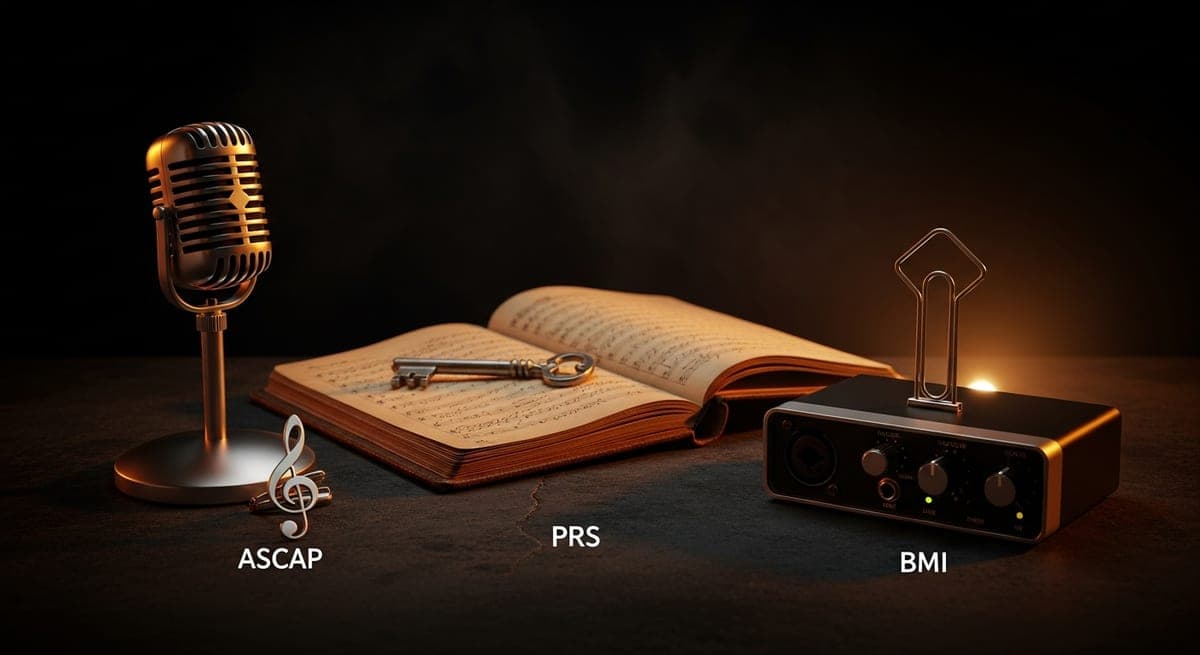
The role of a PRO and why there are multiple
A Performing Rights Organisation (PRO) licenses music use in its home territory and distributes the resulting royalties to its members. Because copyright is territorial (each country has its own legal framework) separate PROs exist in most countries. They cooperate through reciprocal agreements: when music registered with PRS is played in the US, the US PRO (ASCAP, BMI, or SESAC) collects the royalty and passes it back to PRS for distribution to the UK member. In theory, one registration with your home PRO should cover you globally.
PRS for Music: the UK society
PRS for Music is the collection society for UK-based songwriters, composers, and publishers. It collects performance and communication royalties in the UK and receives reciprocal distributions from overseas PROs for international usage. UK artists should be members of PRS as their primary PRO. PRS also operates MCPS, which handles mechanical royalties from reproductions.
ASCAP and BMI: the two main US societies
ASCAP (American Society of Composers, Authors, and Publishers) and BMI (Broadcast Music, Inc.) are the two largest US PROs. Unlike PRS, which has a mandatory single membership structure, US songwriters must choose one or the other and cannot be members of both simultaneously. Key differences:
- ASCAP: non-profit, owned and governed by members; one-time membership fee of $50
- BMI: non-profit status, free to join for songwriters; focuses on emerging artists and diverse genres
- SESAC: smaller, invitation-only US PRO; generally for established catalog owners
Can UK artists join ASCAP or BMI?
UK artists can join ASCAP or BMI, but in most cases they should not. The reciprocal agreement between PRS and the US PROs means that US royalties generated by PRS members are collected by ASCAP or BMI and passed back to PRS for distribution. Joining a US PRO as an additional membership can create conflicts, duplicate registrations, and payment disputes. The exception is if a UK artist relocates to the US permanently, in which case switching primary membership may make sense.
Why some UK artists are advised to join a US PRO
Some advisors recommend UK artists join ASCAP or BMI directly to improve their US royalty collection rates. The argument is that direct membership results in faster and more complete distributions than the reciprocal route. While there is some truth to this for very active US markets, the practical risks (duplicate registrations, conflicts with PRS membership, administrative complexity) typically outweigh the benefit for most independent artists. The better solution is ensuring your works are correctly registered with PRS and carry complete metadata for international matching.
The matching problem: why international royalties go astray
Reciprocal agreements only work when the receiving PRO can match the reported usage to a registered rights holder. If your works are registered with PRS under one title variant, but the US broadcaster reports it under a slightly different title or without an ISWC code, the match fails. The royalty sits unattributed. This is the most common cause of missing international royalties for UK artists; not a failure of the reciprocal system itself, but a metadata and registration quality issue.
How publishing administration addresses international collection
A publishing administrator with multi-territory experience handles the registration quality that makes international reciprocal collection work correctly. This means ensuring ISWC codes are issued and attached to all works, titles are registered consistently across societies, and any unmatched international distributions are actively pursued. The result is that the standard reciprocal system performs closer to its theoretical maximum rather than leaving royalties in undistributed pools.
If you are a UK artist with significant US streaming or broadcast activity and suspect your international royalties are not being fully collected, our free Catalog Assessment will identify where the gaps are.
Frequently Asked Questions
Should a UK songwriter join ASCAP or BMI as well as PRS?
In most cases, no. The reciprocal agreement between PRS and the US PROs means ASCAP or BMI collects your US royalties and passes them back to PRS, and holding an additional US membership can create conflicts, duplicate registrations, and payment disputes. The main exception is a permanent relocation to the US, where switching primary membership may make sense.
How do UK artists get paid for US radio play and streaming?
Through reciprocal agreements between PROs. When music registered with PRS is played in the US, the US PRO (ASCAP, BMI, or SESAC) collects the royalty and passes it back to PRS for distribution to the UK member. In theory, one registration with your home PRO covers you globally.
What is the difference between ASCAP and BMI?
ASCAP is a non-profit owned and governed by its members, with a one-time membership fee of $50. BMI has non-profit status, is free to join for songwriters, and focuses on emerging artists and diverse genres. Unlike PRS, US songwriters must choose one or the other - they cannot be members of both simultaneously.
Why are my US royalties not reaching my PRS account?
The most common cause is a matching failure rather than a fault in the reciprocal system. If your works are registered with PRS under one title variant but the US broadcaster reports a slightly different title, or the registration lacks an ISWC code, the match fails and the royalty sits unattributed. Fixing registration quality and metadata is the reliable remedy.
Published · Updated