
The income structure that makes reggae unique
Most genres have a relatively straightforward income structure: streaming royalties, PRO income, and occasional sync placements. Reggae has a significantly more complex picture. The genre spans two major royalty jurisdictions - UK/international via PRS and Jamaican via JACAP. It has a distinctive live performance economy built around sound system culture that generates its own licensing income. The riddim format creates unusual publishing questions about ownership and splits that have no direct equivalent in most other genres. And reggae's global cultural influence - from Japan to Germany, from Scandinavia to Latin America - means international collecting is disproportionately important. An artist who only manages the obvious income streams while ignoring the Caribbean, sound system, and international dimensions will routinely miss a significant portion of what their music earns.
Streaming royalties
Streaming is now the dominant income source for reggae internationally. Every stream generates two royalty components: a recording royalty (paid to the artist or label via the distributor) and a composition royalty (split between a performance element collected by PRS and a mechanical element collected by MCPS in the UK, or equivalent societies internationally). For UK-based reggae artists distributing through a DSP aggregator, the recording royalty reaches them via their distributor. The composition royalties require PRS and MCPS registrations to be in place before or at the point of release. Streaming in Jamaica specifically may involve additional mechanical licensing via JAMMS if the composition is reproduced via Jamaican-territory streaming services.
UK performing rights via PRS for Music
PRS for Music covers the performing rights income generated in the UK and via its international reciprocal network. For reggae artists based in the UK or whose music receives meaningful UK airplay, PRS is the primary collection society. UK radio (BBC Radio 1Xtra is particularly relevant for reggae, as is Choice FM and regional stations with Caribbean programming), live performances in licensed UK venues, and streaming on UK-facing DSPs all generate PRS income. Works must be registered with PRS before they are performed to capture this income. Many reggae artists with long release histories have older compositions that were never registered - a catalog assessment will identify these gaps.
Jamaican performing rights via JACAP
JACAP collects performing rights income from broadcasts, public performances, and streaming within Jamaica. For reggae specifically, this is a commercially significant income stream. Reggae dominates Jamaican radio airplay - commercial stations including ZIP FM, FAME FM, and RJR play reggae and dancehall as primary formats. Hotel and venue performance of reggae compositions generates JACAP licensing income. Sound system events at major dancehall venues generate JACAP income for featured compositions. UK reggae artists with Jamaican airplay or venue presence can access this income either via the PRS-JACAP reciprocal (if PRS-registered with clean metadata) or via direct JACAP membership for more direct visibility.
Sound system income
Sound system culture is central to reggae's live economy in Jamaica and in the UK's Jamaican diaspora community. Sound system events - from small local juggling sessions to large outdoor events - generate licensing income for the compositions played. In Jamaica, JACAP issues sound system licences. In the UK, PRS licences cover sound system events at licensed venues. The challenge for composition rights holders is that sound system event reporting is inconsistent - licence fees are paid to the PRO in aggregate but individual usage reports vary in accuracy. The practical implication is that sound system income is real but harder to verify and claim than broadcast or streaming royalties.
Neighbouring rights via PPL
Neighbouring rights are distinct from composition royalties. PPL in the UK collects royalties for performers and record labels when sound recordings are broadcast or played publicly - separate from the composition royalties collected by PRS. A reggae artist who both wrote and recorded their music is entitled to PPL income from every UK broadcast of their recordings. PPL distributes separately to the performer and the rights holder (record label). An independent reggae artist who owns their own masters receives both the performer share and the rights holder share via PPL - subject to correctly registering their recordings and performer credits. PPL has international reciprocal agreements, including with neighbouring rights societies in Jamaica, meaning international neighbouring rights income can also route through PPL.
Sync licensing
Sync licensing - placing compositions in film, television, advertising, and video games - is a growing income source for reggae. The genre's association with cultural authenticity, summer, and positivity makes it attractive to advertising and documentary commissioners. The BBC, Channel 4, and UK streaming platforms have commissioned content with reggae soundtracks. Jamaica-focused documentaries and Caribbean tourism campaigns regularly use reggae compositions. Each sync placement generates a one-off sync fee (negotiated directly or via a publisher/sync agent) plus a further performing rights income if the content is broadcast. For a reggae artist with a well-registered catalog and an active sync representative, this can be a meaningful income stream.
Physical and digital mechanicals
Vinyl and CD sales still constitute a meaningful portion of reggae income, particularly in markets like Japan, Germany, and Scandinavia where reggae has deeply committed physical-format audiences. Each physical sale generates a mechanical royalty for the composition, collected by MCPS in the UK and equivalent organisations internationally. For digital, MCPS covers UK streaming mechanicals. JAMMS covers Jamaican digital reproduction. Artists releasing physical product internationally should ensure their compositions are registered with MCPS and that their distributor has the appropriate mechanical licences in place in key markets.
The JACAP-PRS bridge for UK reggae artists
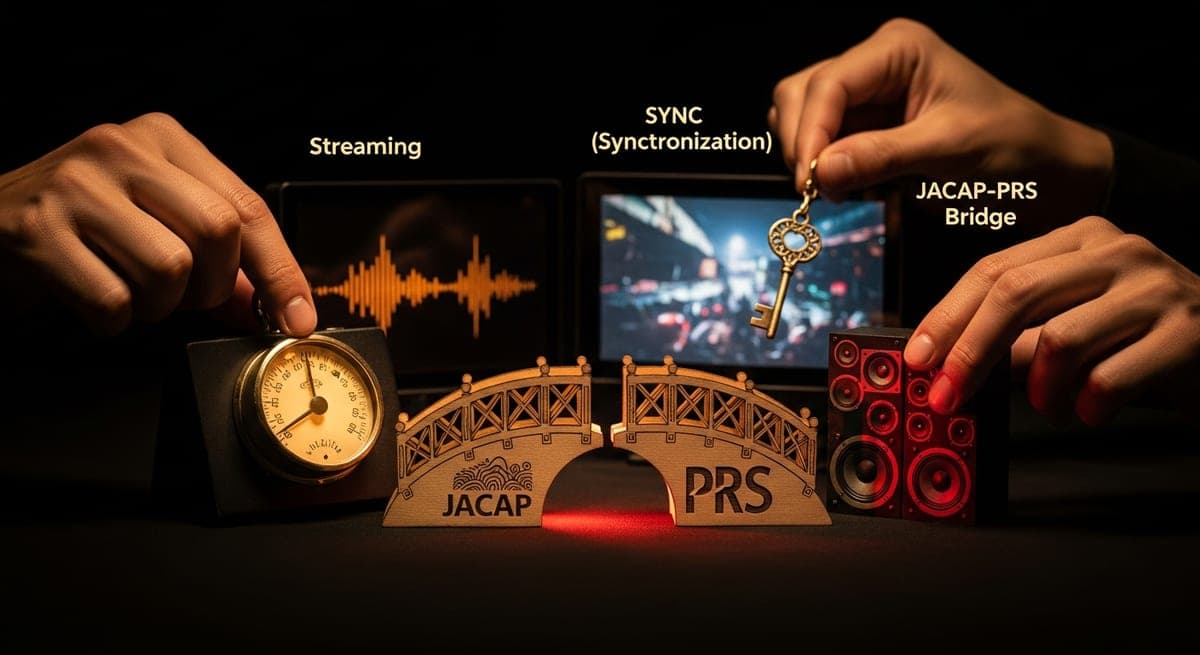
The single most overlooked income gap for UK reggae artists is the Jamaican income flowing through the JACAP-PRS reciprocal. If your compositions receive meaningful Jamaican airplay, are played at Jamaican venues, or are used in Jamaican commercial contexts, JACAP is collecting a royalty on your behalf and routing it to PRS. But PRS can only deliver it to you if your works are registered with accurate metadata. A missing ISWC, an inconsistent title, or a wrong co-author split at PRS means the reciprocal payment cannot be matched and the income goes unclaimed. Getting this right is a one-time investment that pays out retrospectively and forward permanently.
Code Group Music provides publishing administration and distribution services for reggae artists and Caribbean music rights holders. Our catalog assessment covers PRS registration, JACAP reciprocal verification, PPL neighbouring rights, MCPS mechanical setup, and metadata audit. Start at codegroupmusic.co.uk/#catalog-assessment.
Frequently Asked Questions
Do reggae artists need to register with both PRS and JACAP?
It depends on where your music is performed. PRS covers UK and international income via reciprocals, including a JACAP reciprocal for Jamaican income. If you have significant Jamaican airplay or performance activity, direct JACAP registration gives you better visibility. Most UK-based reggae artists benefit from at minimum correct PRS registration and clean metadata to ensure the JACAP reciprocal functions.
How much do sound system performances pay in royalties?
Sound system venues in the UK and Jamaica pay JACAP and PRS licence fees respectively. The per-composition income from a sound system event is modest, but if your music is played regularly at licensed events over time, the cumulative income is meaningful. The challenge is accurate reporting of which compositions were played.
Is PPL relevant for reggae artists?
Yes. PPL collects neighbouring rights royalties for performers and record labels when recordings are broadcast or played publicly in the UK. Any reggae artist whose recordings receive UK radio airplay is entitled to PPL income, provided their recordings are registered with PPL and performer credits are correct.
How does sync licensing work for reggae?
Sync licensing requires clearing both the composition copyright (via the publisher or administrator) and the master recording (via the label or artist who owns the master). Both clearances are needed for a sync placement. A publisher or sync agent pitches the catalog to music supervisors; when a placement is agreed, a one-off sync fee is paid and a performing rights tail follows if the content is broadcast.
Published