General

Broad music industry knowledge for independent artists — from understanding rights to starting a label.

9 articles

Music Rights Management for Independent Artists: What You Need to Know
Pillar guide

Music Rights Management for Independent Artists: What You Need to Know

Rights management is not just for major labels. Every independent artist who releases music is managing rights, whether they realise it or not. Here is what that means in practice.

Read the complete guide →
PRS Payment Dates 2026: When Does PRS Pay Songwriters?

PRS Payment Dates 2026: When Does PRS Pay Songwriters?

PRS for Music pays songwriters and publishers four times a year. The 2026 payment windows fall in February, May, August, and November. Most members receive payment within a few days of the distribution date, though the money covers usage from 12 to 18 months earlier.

Read article →
AI Music and Copyright in the UK - What Artists and Labels Need to Know

AI Music and Copyright in the UK - What Artists and Labels Need to Know

Artificial intelligence is changing how music is created, distributed, and monetised. UK copyright law as it stands in 2026 does not protect AI- generated works in the same way as human-authored works - and the legal framework is actively evolving. Here is what independent artists and labels need to understand now.

Read article →
PRS Foundation Grants: The Complete UK Music Funding Guide Beyond Women Make Music

PRS Foundation Grants: The Complete UK Music Funding Guide Beyond Women Make Music

PRS Foundation is the UK music industry's primary grant-giving body, but most artists only know about Women Make Music. The Foundation runs multiple programmes covering international showcasing, emerging artist development, touring support, and specialist funds for underrepresented communities. This is the complete picture.

Read article →
How to Read a Music Royalty Statement: A Plain-English Guide

How to Read a Music Royalty Statement: A Plain-English Guide

A royalty statement tells you what you've earned and where it came from, but most are written in a way that makes them deliberately difficult to understand. This guide breaks down every line in plain English so you can verify your earnings and spot if something is wrong.

Read article →
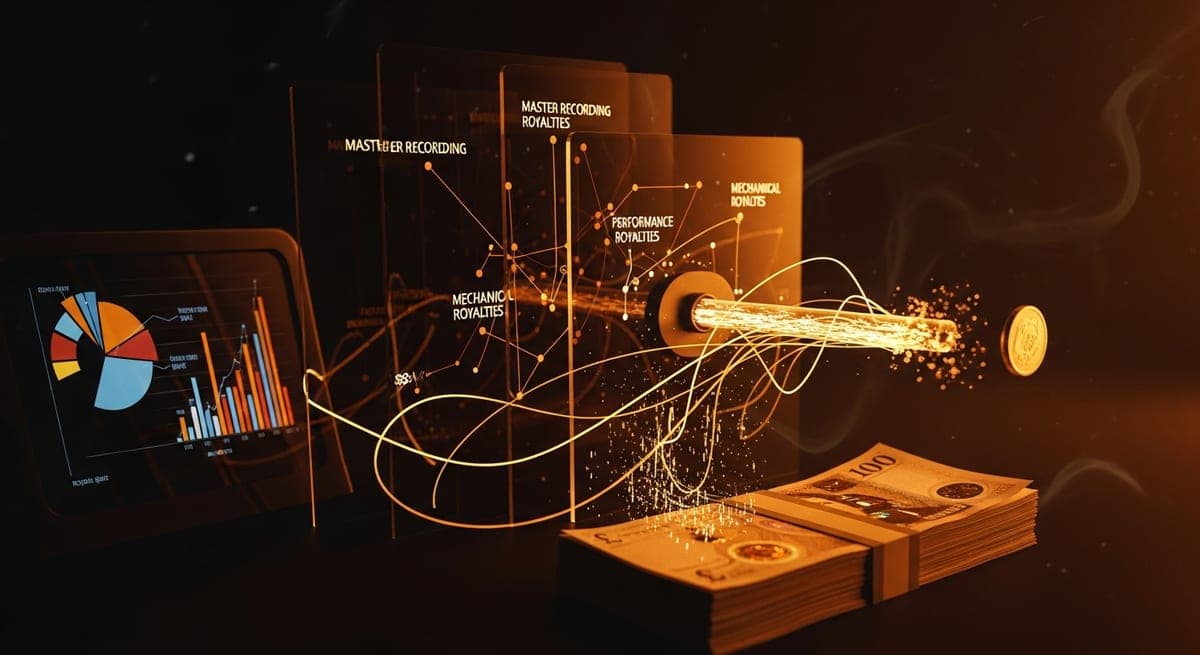
How Streaming Royalties Work in the UK: The Complete Picture

How Streaming Royalties Work in the UK: The Complete Picture

A single stream generates multiple separate royalty payments, and most independent artists are only collecting one of them. Here is the complete picture of how streaming royalties work in the UK.

Read article →
What Is an Independent Music Label? A Plain-English Explanation

What Is an Independent Music Label? A Plain-English Explanation

Independent music labels vary enormously in size, structure, and what they offer artists. Here is a clear explanation of what an indie label is, how it differs from a major, and what signing to one actually means.

Read article →
Music Industry Glossary: Essential Terms for Independent Artists

Music Industry Glossary: Essential Terms for Independent Artists

The music industry has its own language, and understanding it is the first step to navigating it. Here are the most important terms every independent artist should know, explained clearly.

Read article →
Why Independent Artists Don't Get Paid: The Seven Most Common Reasons

Why Independent Artists Don't Get Paid: The Seven Most Common Reasons

Most independent artists are generating more royalties than they are receiving. The gap is not the result of a broken system; it is the result of specific, fixable mistakes. Here are the most common ones.

Read article →

Common questions about general

What rights does an independent artist own?

Independent artists typically own two sets of rights: the master rights (copyright in the sound recording) and the publishing rights (copyright in the underlying composition and lyrics). Both generate separate royalty streams. Artists who record their own songs own both, giving them access to performance, mechanical, neighbouring rights, and sync royalties.

Why are independent artists not getting paid royalties they are owed?

The most common reasons are: works not registered with a PRO, missing or incorrect metadata (no ISRC, wrong IPI), no publisher representative to claim the publisher share, no neighbouring rights registration with PPL, and uncollected international royalties. Each gap represents money sitting in a black box waiting to be claimed.

What is the difference between master rights and publishing rights?

Master rights belong to whoever owns the sound recording — usually the artist or label that funded the recording. Publishing rights belong to the songwriter(s). Each set of rights is licensed separately and generates different royalty streams. Many independent artists own both, but must register and administer them separately.

How do I start an independent record label in the UK?

Register a company at Companies House, choose a trading name and check it does not conflict with existing labels, open a business bank account, join PPL as a record company to register your recordings and collect neighbouring rights, and set up distribution through a digital distributor or label services provider. You will also need standard artist and producer agreements.

What is a royalty statement and how do I read one?

A royalty statement is a periodic report from your distributor, PRO, or label showing income earned across different income sources — streaming, downloads, broadcast, sync. Key figures to check are: gross revenue, deductions (distribution fees, advances recouped), net payable, and the accounting period covered. Discrepancies should be queried in writing within the dispute window stated in your agreement.