Publishing

Everything independent artists and songwriters need to know about music publishing, PROs, royalty collection, and publishing administration.
62 articles

Music Publishing Explained: The Complete Guide for Independent Artists
Pillar guide

Music Publishing Explained: The Complete Guide for Independent Artists

Music publishing is the business of managing and monetising the rights in a musical composition, separate from the recording. Understanding it is essential for any independent artist who wants to collect every pound their music earns.

Read the complete guide →
APRA AMCOS Explained — What UK Artists Need to Know About Australian Royalties

APRA AMCOS Explained — What UK Artists Need to Know About Australian Royalties

APRA AMCOS is the Australasian performing and mechanical rights organisation, covering Australia and New Zealand. UK artists registered with PRS for Music collect Australian and New Zealand royalties through the PRS-APRA AMCOS reciprocal agreement without joining separately.

Read article →
Best Publishing Administrators in the UK (2026)

Best Publishing Administrators in the UK (2026)

UK songwriters have several publishing administration options in 2026, from global self-serve platforms to boutique UK specialists. The right choice depends on catalogue size, royalty complexity, and how much hands-on service you need. This guide evaluates the main options on criteria that actually matter.

Read article →
Black Box Royalties: Where Your Missing Money Actually Sits

Black Box Royalties: Where Your Missing Money Actually Sits

Black box royalties are the billions of pounds in music income that cannot be paid to rights holders because the correct ownership information is missing. Most independent songwriters contribute to this pool without knowing it — and most are eligible to claim from it.

Read article →
How to Get Your Worship Song on the CCLI Top 100

How to Get Your Worship Song on the CCLI Top 100

The CCLI Top 100 is the definitive measure of a worship song's adoption in the global church. Reaching the Top 100 generates significantly higher CCLI royalties and signals credibility to worship leaders, publishers, and Christian media. This guide explains how CCLI rankings work and the strategies that drive church adoption.

Read article →
Christian Music Royalties: Every Income Stream Explained

Christian Music Royalties: Every Income Stream Explained

Christian and gospel music generates royalties from more sources than most Christian artists realise: CCLI church licensing, PRS performance royalties, MCPS mechanicals, neighbouring rights, sync fees, and international collection from the global church. This guide maps every income stream available to UK Christian songwriters.

Read article →
GEMA Explained — What UK Artists Need to Know About German Royalties

GEMA Explained — What UK Artists Need to Know About German Royalties

GEMA is Germany's performing and mechanical rights organisation — one of the most comprehensive and high-paying in the world. UK artists registered with PRS for Music collect German performance and mechanical royalties through the PRS-GEMA reciprocal agreement, but the complexity of GEMA's system means many UK artists are not collecting everything they are owed.

Read article →
How CCLI Pays Songwriters: The Complete Payout Breakdown

How CCLI Pays Songwriters: The Complete Payout Breakdown

CCLI (Christian Copyright Licensing International) collects licence fees from churches and distributes royalties to songwriters whose worship songs are sung in those churches. The payout mechanism is more complex than most worship songwriters realise — involving church reporting, usage weighting, Top 100 rankings, and an administration fee structure.

Read article →
How Much Does PRS Pay Per Stream? (2026 Data)

How Much Does PRS Pay Per Stream? (2026 Data)

PRS does not pay a fixed per-stream rate. The amount you receive per stream depends on the platform, the territory, the subscription tier of the listener, and how many total streams PRS processes in a given period. This guide explains how PRS streaming royalties are calculated and what realistic earnings look like in 2026.

Read article →
How Songwriters Actually Get Paid in the UK (2026)

How Songwriters Actually Get Paid in the UK (2026)

UK songwriters earn from six distinct royalty streams, each collected by a different organisation and paid on a different schedule. Most independent songwriters collect from one or two of these streams and leave the rest unclaimed. This is the complete picture of how songwriter income works in 2026.

Read article →
How to Get Your Music on UK Television

How to Get Your Music on UK Television

Getting your music placed in a UK TV programme generates a sync fee, long-term PRS broadcast royalties, and significant audience reach. The process is more accessible to independent artists than most assume — but it requires understanding how UK TV music supervision works.

Read article →
How to Register with JACAP (Step-by-Step Guide)

How to Register with JACAP (Step-by-Step Guide)

JACAP (Jamaica Association of Composers, Authors and Publishers) is the Jamaican performing rights organisation. Registering with JACAP allows Jamaican songwriters and Caribbean artists to collect royalties from performances and broadcasts in Jamaica. This step-by-step guide covers the registration process for UK-based artists.

Read article →
How UK Artists Collect Worldwide Royalties — A Territory-by-Territory Guide

How UK Artists Collect Worldwide Royalties — A Territory-by-Territory Guide

UK artists registered with PRS for Music can collect performance royalties from most countries in the world through reciprocal agreements between national collection societies. But several key income streams — particularly mechanical royalties in some territories and neighbouring rights in the US — require additional steps that most artists miss.

Read article →
JACAP vs PRS: Guide for UK-Jamaican Songwriters

JACAP vs PRS: Guide for UK-Jamaican Songwriters

UK-based Jamaican songwriters occupy a unique position in the international royalty system — with potential income flowing from both the UK PRS network and the Jamaican JACAP network. This guide explains how the two PROs interact, where income falls through the cracks, and what to do about it.

Read article →
How UK Artists Collect Neighbouring Rights — A Step-by-Step Guide

How UK Artists Collect Neighbouring Rights — A Step-by-Step Guide

Neighbouring rights are royalties paid to performers and record labels when their recordings are broadcast or publicly performed. Collecting them requires separate registration with PPL, and for international income, requires understanding how reciprocal agreements between national collection societies work.

Read article →
Performance vs Mechanical Royalties: What's the Difference?

Performance vs Mechanical Royalties: What's the Difference?

Performance royalties and mechanical royalties are both paid to songwriters and composers, but they come from different types of music use and are collected by different organisations. Understanding the distinction is essential for knowing where your income should come from — and where it might be missing.

Read article →
PPL vs PRS: Understanding the Two UK Copyright Streams

PPL vs PRS: Understanding the Two UK Copyright Streams

PPL and PRS both collect royalties from UK music use, but they represent two completely separate copyright streams. PRS collects for songwriters and composers. PPL collects for performers and record labels. The same broadcast can generate income from both — but only if you are registered with both.

Read article →
PRS Distribution Dates: When You'll Get Paid (2026 Calendar)

PRS Distribution Dates: When You'll Get Paid (2026 Calendar)

PRS for Music distributes royalties on a quarterly schedule, but the lag between a usage event and the payment arriving in your account is often longer than members expect. This guide explains the 2026 distribution schedule and the factors that affect when specific royalty types are paid.

Read article →
The PRS Licence Loophole: What It Is and What It Costs Songwriters

The PRS Licence Loophole: What It Is and What It Costs Songwriters

Businesses often claim exemptions to avoid paying a PRS licence. Most exemptions are narrower than they appear — and every unpaid licence is a missed royalty for the songwriter. Here's what the so-called loopholes actually are.

Read article →
The PRS Licence Loophole — What It Is and What Rights Holders Lose

The PRS Licence Loophole — What It Is and What Rights Holders Lose

The "PRS licence loophole" refers to a set of legal exemptions in the Copyright, Designs and Patents Act 1988 that allow certain venues and businesses to play music without paying for a PRS licence. When those exemptions apply, songwriters and publishers lose royalties they are otherwise owed.

Read article →
PRS for Music Registration Fees (2026 Breakdown)

PRS for Music Registration Fees (2026 Breakdown)

PRS for Music charges different registration fees depending on whether you are joining as a songwriter, a publisher, or both. The fees changed in recent years and there is a reduced rate for younger members. This guide explains the current 2026 fee structure and what you get for each membership type.

Read article →
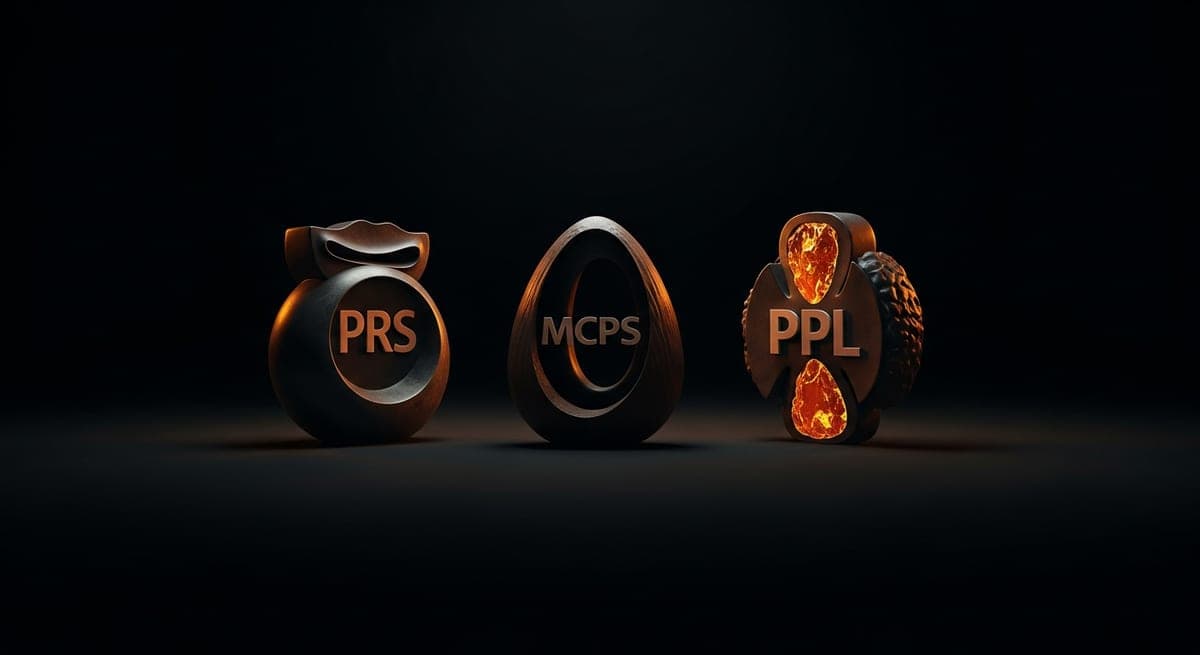
PRS vs MCPS vs PPL: Which Ones Do You Actually Need?

PRS vs MCPS vs PPL: Which Ones Do You Actually Need?

PRS, MCPS, and PPL are three separate UK rights bodies that collect three different royalty streams. Most UK songwriters and artists need all three, but they serve completely different purposes. This guide explains what each one collects, who can join, and what happens if you are not registered.

Read article →
Publishing Administration for Worship Music

Publishing Administration for Worship Music

Worship music publishing has a unique royalty structure that combines CCLI church licensing, PRS performance royalties, MCPS mechanicals, and sync income from Christian media. Most general publishing administrators do not understand the CCLI layer. This guide explains what specialist worship publishing administration covers.

Read article →
Reggae Sync Licensing: The Untapped Goldmine

Reggae Sync Licensing: The Untapped Goldmine

Reggae music is one of the most chronically underused genres in sync licensing relative to its cultural footprint. Reggae's global brand — peace, rebellion, spirituality, summer — maps to advertising, film, and television briefs in ways that are commercially valuable, but most reggae artists have no sync strategy.

Read article →
SACEM Explained — What UK Artists Need to Know About French Royalties

SACEM Explained — What UK Artists Need to Know About French Royalties

SACEM is France's performing and mechanical rights society, one of the oldest and most active collecting organisations in the world. UK artists registered with PRS for Music collect French royalties through the PRS-SACEM reciprocal agreement without needing to join SACEM separately.

Read article →
Self-Publishing vs Hiring a Publishing Administrator: The Real Cost

Self-Publishing vs Hiring a Publishing Administrator: The Real Cost

Self-publishing your music keeps 100% of your royalties — in theory. In practice, most self-published songwriters collect a fraction of what they are entitled to because the administration is complex, time-consuming, and requires specialist knowledge. This guide works through the real cost of each approach.

Read article →
Sentric vs PRS Direct Membership: Which Is Better?

Sentric vs PRS Direct Membership: Which Is Better?

Sentric Music is a publishing administrator that manages PRS collection on your behalf, taking a 20% commission. PRS direct membership lets you manage your own catalogue for a one-time fee with no ongoing commission. The right choice depends on your catalogue size and how much of your own time and expertise you want to invest in administration.

Read article →
SESAC Explained — What UK Artists Need to Know About SESAC Royalties

SESAC Explained — What UK Artists Need to Know About SESAC Royalties

SESAC is the smallest of the three major US performing rights organisations — and the only one that is invitation-only. UK artists typically collect US performance royalties through PRS's reciprocal agreements with ASCAP and BMI, but understanding where SESAC fits in is important for artists with significant US exposure.

Read article →
SOCAN Explained — What UK Artists Need to Know About Canadian Royalties

SOCAN Explained — What UK Artists Need to Know About Canadian Royalties

SOCAN is Canada's performing rights organisation, collecting royalties for songwriters and publishers when music is performed or broadcast in Canada. UK artists registered with PRS for Music can collect Canadian royalties through the PRS-SOCAN reciprocal agreement — but mechanical royalties require additional steps.

Read article →
Songtrust Alternatives: 5 Options for UK Songwriters in 2026

Songtrust Alternatives: 5 Options for UK Songwriters in 2026

Songtrust is no longer the obvious default for UK songwriters looking for publishing administration. Support quality has declined following multiple acquisitions, and several alternatives now offer better value for UK-specific needs. This guide covers five alternatives with honest assessments of each.

Read article →
Sync Licensing for Christian Music: The Untapped Opportunity

Sync Licensing for Christian Music: The Untapped Opportunity

Sync licensing is one of the most underutilised income streams in Christian music. Faith-based film, Christian television, church media production, and increasingly mainstream TV and advertising all represent sync opportunities for Christian artists — but most are not positioned to access them.

Read article →
Sync Licensing UK: How to Get Your Music Into TV, Film and Advertising

Sync Licensing UK: How to Get Your Music Into TV, Film and Advertising

Sync licensing in the UK is one of the highest-value income streams available to independent artists — but only if your rights are correctly cleared and your catalog is registered properly. Here is how it works.

Read article →
Caribbean Music Royalties: JACAP, COTT, ECCO and JAMMS in Plain English

Caribbean Music Royalties: JACAP, COTT, ECCO and JAMMS in Plain English

The Caribbean has four distinct performing rights organisations covering different island territories: JACAP in Jamaica, COTT in Trinidad and Tobago, ECCO across the Eastern Caribbean, and JAMMS for mechanical rights. Understanding which collects what — and how they interact with PRS for Music — is essential for any UK-Caribbean artist with royalties in the region.

Read article →
What CD Baby Pro Users Should Do in 2026: A Publishing-Admin Migration Guide

What CD Baby Pro Users Should Do in 2026: A Publishing-Admin Migration Guide

CD Baby Pro — the publishing administration service offered by CD Baby — was discontinued in August 2023. Artists who relied on CD Baby Pro for international publishing royalty collection now have a gap in their setup that CD Baby's current offering, CD Baby Boost, does not fully address. This guide explains what changed, what Boost covers, and what to do if you are still underserved.

Read article →
How Reggae Artists Get Paid in 2026: Streaming, Sync, Sound Systems and the JACAP–PRS Bridge

How Reggae Artists Get Paid in 2026: Streaming, Sync, Sound Systems and the JACAP–PRS Bridge

Reggae has a more complex income structure than most genres because it straddles multiple royalty systems: UK and international performing rights via PRS, Jamaican performing rights via JACAP, mechanical royalties for streaming, sound system licensing, and a growing sync market. This is the complete income picture for reggae artists in 2026.

Read article →
How Do Soca Artists Make Money? Royalties, Carnival Licensing and the COTT Setup

How Do Soca Artists Make Money? Royalties, Carnival Licensing and the COTT Setup

Soca has a distinctive income model shaped by carnival's seasonal calendar: royalties compress into a short release window before Carnival season and then generate ongoing income from streaming, fete licensing, and international airplay for the rest of the year. Understanding this structure — and the role of COTT in Trinidad — is essential for soca artists and their management.

Read article →
JACAP Explained: How Jamaican and UK-Caribbean Songwriters Actually Get Paid

JACAP Explained: How Jamaican and UK-Caribbean Songwriters Actually Get Paid

JACAP (Jamaica Association of Composers, Authors and Publishers) is the Jamaican collecting society responsible for licensing and distributing performing rights royalties for songwriters and composers whose music is heard in Jamaica and internationally. For UK-Caribbean artists, understanding JACAP is the first step to collecting the Caribbean income your music is already generating.

Read article →
Riddim Ownership and Publishing: Who Actually Owns What When Ten Artists Voice the Same Beat

Riddim Ownership and Publishing: Who Actually Owns What When Ten Artists Voice the Same Beat

The riddim format — where a single instrumental backing track is licensed to multiple vocalists who each record their own version — is fundamental to Jamaican dancehall and reggae music. It creates an unusual publishing situation that most standard music business guides ignore: who owns the riddim, who owns each voiced version, and how royalties split when ten artists record over the same beat.

Read article →
Songtrust Review 2026: Is It Worth It for UK Artists?

Songtrust Review 2026: Is It Worth It for UK Artists?

Songtrust is the most widely used publishing administrator for independent songwriters globally. But for UK artists, it is not the obvious choice it appears. This is an honest assessment of what Songtrust does well, where it falls short, and what UK artists should consider instead.

Read article →
Songtrust vs Sentric vs Code Group Music: How to Choose a UK Publishing Administrator in 2026

Songtrust vs Sentric vs Code Group Music: How to Choose a UK Publishing Administrator in 2026

UK independent artists evaluating publishing administration have three main options: Songtrust (US-based, large territory coverage), Sentric (UK-founded, now owned by Believe/TuneCore), and boutique specialists like Code Group Music. This comparison covers pricing, territory coverage, support quality, and which type of artist each is actually right for.

Read article →
How UK Indie Labels Should Structure Their PRS Publisher Accounts

How UK Indie Labels Should Structure Their PRS Publisher Accounts

Setting up a PRS publisher account is not the same as joining PRS as a songwriter. UK independent labels that operate a publishing entity, sign songwriters, or administer catalogs on behalf of artists need to understand the publisher membership structure, how to open and manage publisher accounts, and how the publisher share interacts with writer shares.

Read article →
PRS vs ASCAP vs BMI: The UK Songwriter's Guide to Choosing a US PRO and Collecting US Royalties

PRS vs ASCAP vs BMI: The UK Songwriter's Guide to Choosing a US PRO and Collecting US Royalties

UK songwriters collect US performance royalties through the PRS–ASCAP/BMI reciprocal agreement, without needing a US PRO registration in most cases. But for UK artists with significant US streaming audiences, live touring in the US, or US sync placements, understanding the US royalty system — and when to register directly — can unlock significant additional income.

Read article →
How to Register Your Songs with PRS for Music

How to Register Your Songs with PRS for Music

PRS for Music collects performance and mechanical royalties on behalf of songwriters and publishers across the UK. If you have written songs that are being performed or streamed and you have not registered them with PRS, those royalties are sitting uncollected. Here is how to register correctly.

Read article →
How Much Do Independent Artists Lose in Unclaimed Royalties?

How Much Do Independent Artists Lose in Unclaimed Royalties?

Collecting societies around the world hold significant sums in unmatched royalties: money that has been collected but cannot be paid because the rights holder has not registered, or has registered incorrectly. For independent artists, this is not a theoretical problem. Here is what unclaimed royalties are, where they come from, and how to recover them.

Read article →
PRS for Music vs DIY: Why Self-Registration Leaves Money Behind

PRS for Music vs DIY: Why Self-Registration Leaves Money Behind

Joining PRS for Music and registering your songs yourself covers the basics. But self-registration has well-documented gaps that result in royalties not being collected. This guide explains what PRS self-registration misses and when to bring in a publishing administrator.

Read article →
How to Register with Multiple PROs as an Independent Artist

How to Register with Multiple PROs as an Independent Artist

Most countries have their own performing rights organisation, and while reciprocal agreements between PROs mean you do not always need to join every one, there are significant gaps in those agreements that cause royalties to go uncollected for independent artists with international audiences.

Read article →
What is SoundExchange and Do You Need to Register?

What is SoundExchange and Do You Need to Register?

SoundExchange is the US organisation that collects digital performance royalties for recordings played on internet radio, satellite radio, and cable music services. For UK artists with any US audience, it is a royalty stream that requires direct registration; it is one that most independent artists have never claimed.

Read article →
What is the Publisher Share and Why Aren't You Claiming It?

What is the Publisher Share and Why Aren't You Claiming It?

Every time your song is performed or streamed, PRS splits the royalty 50/50 between the writer and the publisher. If you have not registered a publisher, that publisher half is sitting uncollected. For most independent artists, this is the single largest source of avoidable royalty loss.

Read article →
How to License a Cover Song: Royalties, Permissions, and the Law for UK Artists

How to License a Cover Song: Royalties, Permissions, and the Law for UK Artists

Recording and releasing a cover song requires a mechanical licence from the original composition's rights holder. Without it, you're infringing copyright, even if you credit the original artist. Here's how the system works in the UK.

Read article →
Music Publishing Deals: What Independent Artists Need to Know Before Signing

Music Publishing Deals: What Independent Artists Need to Know Before Signing

A music publishing deal gives a publisher the right to administer your compositions in exchange for a share of royalties, sometimes for life. Before you sign, you need to understand exactly what you're giving up and what you're getting in return.

Read article →
PPL Explained: What It Is, How to Join, and Why Independent Artists Are Missing Income

PPL Explained: What It Is, How to Join, and Why Independent Artists Are Missing Income

PPL (Phonographic Performance Limited) is the UK collecting society for neighbouring rights: royalties paid when recordings are broadcast or played publicly. Thousands of independent artists are registered with PRS but have never joined PPL, leaving significant income uncollected.

Read article →
What Are Neighbouring Rights in Music? A Complete Guide for Independent Artists

What Are Neighbouring Rights in Music? A Complete Guide for Independent Artists

Neighbouring rights are royalties paid to performers and record labels when their recordings are broadcast or played in public, separate from and in addition to publishing royalties. Most independent artists never claim them.

Read article →
What Are Mechanical Royalties? A Plain-English Guide for Independent Artists

What Are Mechanical Royalties? A Plain-English Guide for Independent Artists

Mechanical royalties are one of the most misunderstood income streams in music, and one of the most commonly uncollected. Here is exactly what they are, where they come from, and how to make sure you receive them.

Read article →
Performance Royalties Explained: What They Are and How to Collect Them

Performance Royalties Explained: What They Are and How to Collect Them

Performance royalties are generated every time your music is played in public, from radio to streaming to live venues. Most independent artists collect only a fraction of what they are owed. Here is why, and how to fix it.

Read article →
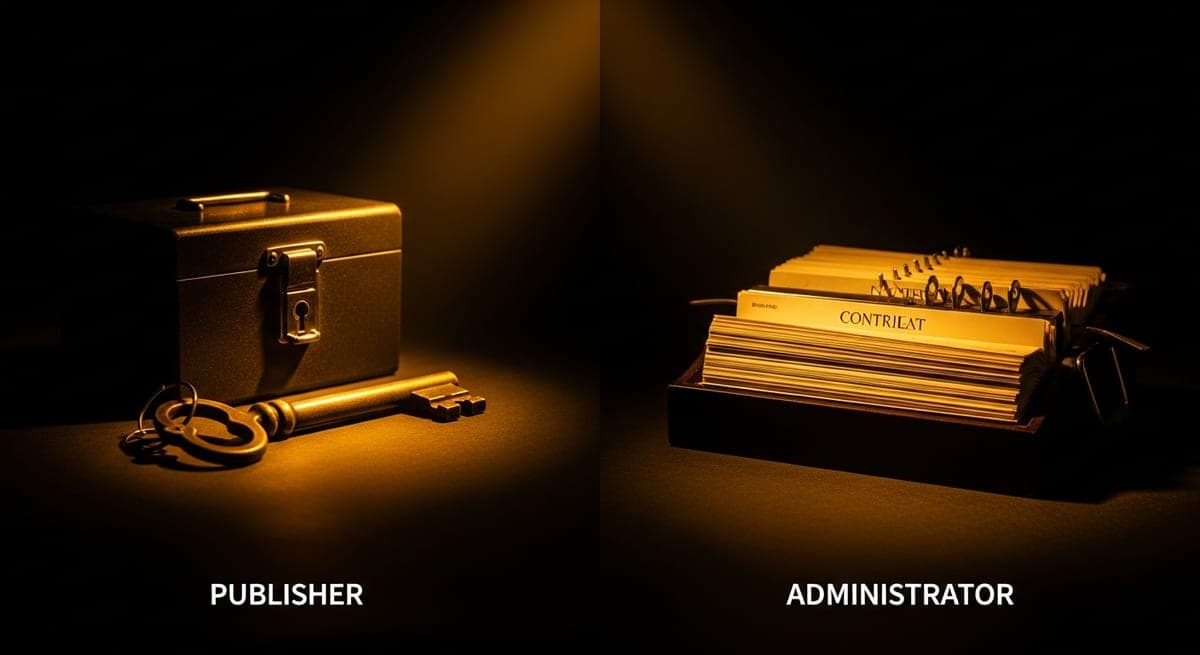
Music Publisher vs Publishing Administrator: What's the Difference and Which Do You Need?

Music Publisher vs Publishing Administrator: What's the Difference and Which Do You Need?

These two services are often confused, but the difference between them is significant, particularly around copyright ownership. Here is a clear breakdown of what each does and how to choose.

Read article →
ASCAP vs PRS vs BMI: Which PRO Do You Need as a UK Artist?

ASCAP vs PRS vs BMI: Which PRO Do You Need as a UK Artist?

PRS for Music handles UK royalties, but ASCAP and BMI collect in the US. For UK artists with American audiences, understanding the relationship between these three organisations is essential.

Read article →
What is Publishing Administration and Why Does It Matter?

What is Publishing Administration and Why Does It Matter?

Most independent artists register with a PRO and assume they are covered. They are not. Here is what publishing administration actually involves and how much it can change your income.

Read article →
How to Claim Unclaimed Music Royalties in the UK: A Practical Guide

How to Claim Unclaimed Music Royalties in the UK: A Practical Guide

Unclaimed royalties are more common than most artists realise, and the window to claim them is limited. Here is how to find out whether money is owed to you and how to start the claiming process.

Read article →
Sync Licensing Explained: How to Get Your Music Into TV, Film, and Advertising

Sync Licensing Explained: How to Get Your Music Into TV, Film, and Advertising

Sync licensing is one of the most lucrative income streams available to independent artists, and one of the least understood. Here is how it works and how to position your catalog for sync opportunities.

Read article →
How Long Does PRS for Music Take to Pay? Payment Schedules Explained

How Long Does PRS for Music Take to Pay? Payment Schedules Explained

PRS royalties do not arrive in real time. Understanding the payment cycle, and why some payments take longer than others, helps you plan your finances and identify when something has gone wrong.

Read article →
What Is MCPS? The Mechanical Copyright Protection Society Explained

What Is MCPS? The Mechanical Copyright Protection Society Explained

MCPS collects mechanical royalties for UK songwriters and composers whenever their music is reproduced. Understanding how it works, and its relationship to PRS for Music, is essential for complete royalty collection.

Read article →
How to Collect Royalties Through PRS for Music: A Practical Guide for UK Artists

How to Collect Royalties Through PRS for Music: A Practical Guide for UK Artists

PRS for Music is the primary collection society for UK songwriters and composers, but joining is only the beginning. Here is a clear guide to how PRS royalties work and how to make sure you are collecting everything you are owed.

Read article →