Who gets paid when an AI meme uses your song?
If a meme uses your song, the owner of the recording and the people who wrote or publish the song may earn through separate routes. Whether money reaches you depends on which audio the clip uses, where it was posted and who manages your rights. If you have just found a clip, save the link, check whether it uses your original recording, and ask your distributor or publishing administrator which uses they can report.
Found your song in a viral clip? Check these three things first
Do these today, before the clip is edited or deleted:
- Save the link: copy the post URL, the account name and the date. See the full evidence checklist.
- Check which audio the clip uses: listen for whether it plays your original recording or a new version of your song, such as a cover or an AI remake. This decides whose rights are involved.
- Ask who can report the use: send the link to your distributor and to your publisher or publishing administrator. Ask which uses on that platform they can see and report for you.
What to check on each platform
Platforms handle music in two ways. A creator can pick your track from the app's own music library, or upload a video with the music already in it. The two can be detected and reported through different routes, so ask your distributor how each one appears on your statements.
| Platform | First thing to check |
|---|---|
| YouTube | Is there a Content ID claim on the video, and is its policy to earn from it, track it or block it? The outcome can differ by country. See how YouTube Content ID claims work |
| TikTok | Did the creator use your official sound from the library, or upload the music as part of the video? Ask your distributor how each type of use is reported. |
| Instagram and Facebook | Was the track picked in the app, or detected in uploaded audio? Ask your distributor or rights partner what they can see for each. |
| X | Keep the post URL. Ask your rights representative which licensing or reporting route, if any, covers that use. |
What the clip uses decides whose rights are involved
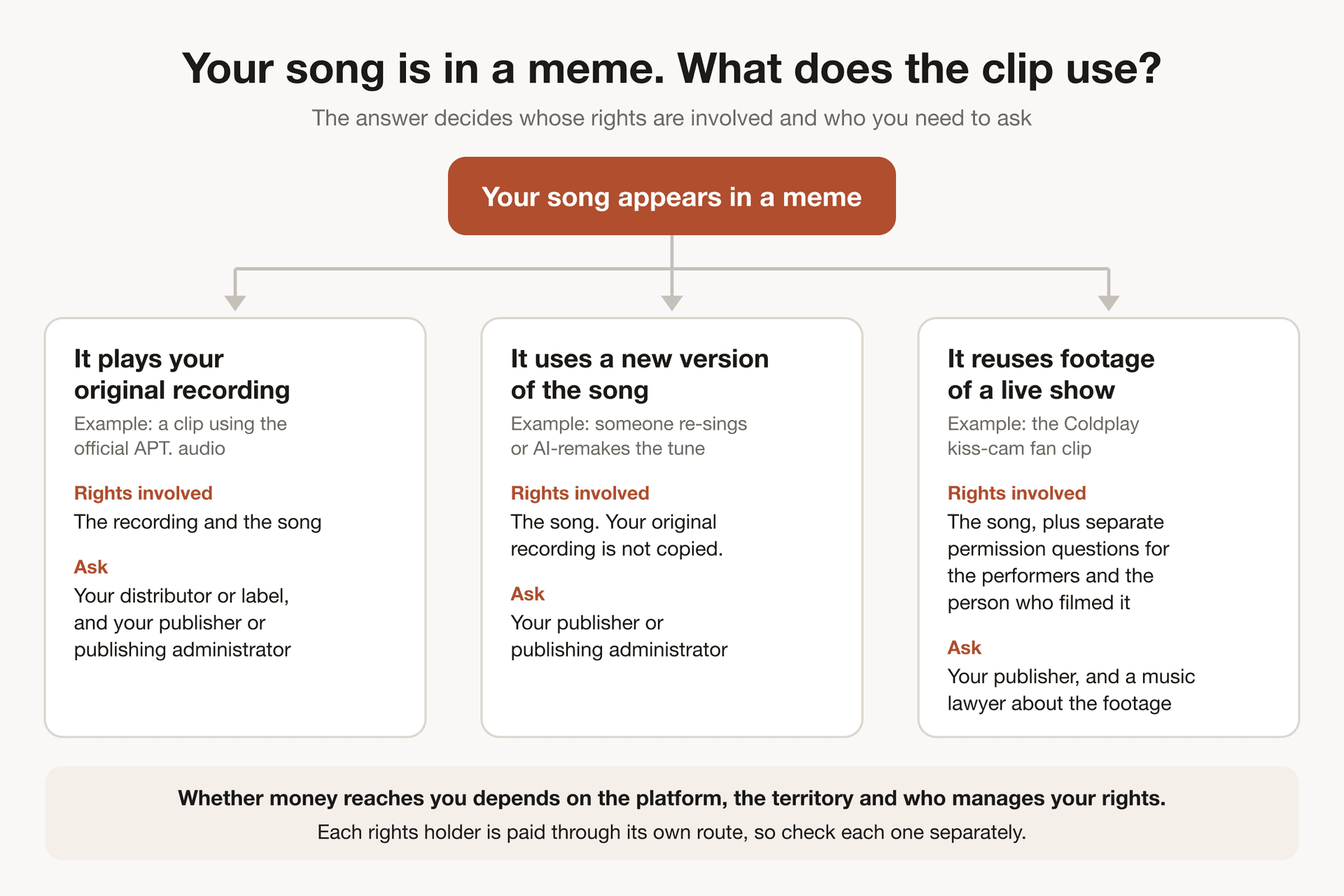
A released song usually has two copyrights. The recording, also called the master, belongs to a label or to the artist who paid for it. The song itself, also called the composition, belongs to the songwriters and their publishers. Each one is paid through its own route, so a clip can earn for one and not the other.
What the APT. memes show: original recording or new version
APT. by Rosé and Bruno Mars was one of the songs reused in the November 2026 memes. A clip that plays the official audio uses both copyrights: the recording, released by The Black Label and Atlantic, and the song, which has 11 credited writers and, according to Music Week, at least five publishers.
A clip that re-sings the tune, or uses an AI remake of it, does not copy the recording. The recording owner's claim drops away, but the songwriters still have a claim on the new version. That includes Mike Chapman and Nicky Chinn, who are credited because APT. uses part of Toni Basil's 1982 hit Mickey.
For your own catalogue, ask the same question about every clip: is this my recording, or a new version of my song? The official video is below for reference. Its view count shows how well people knew the song before the memes. It says nothing about what any meme earned.
What the Coldplay clip shows: live performance and reused footage
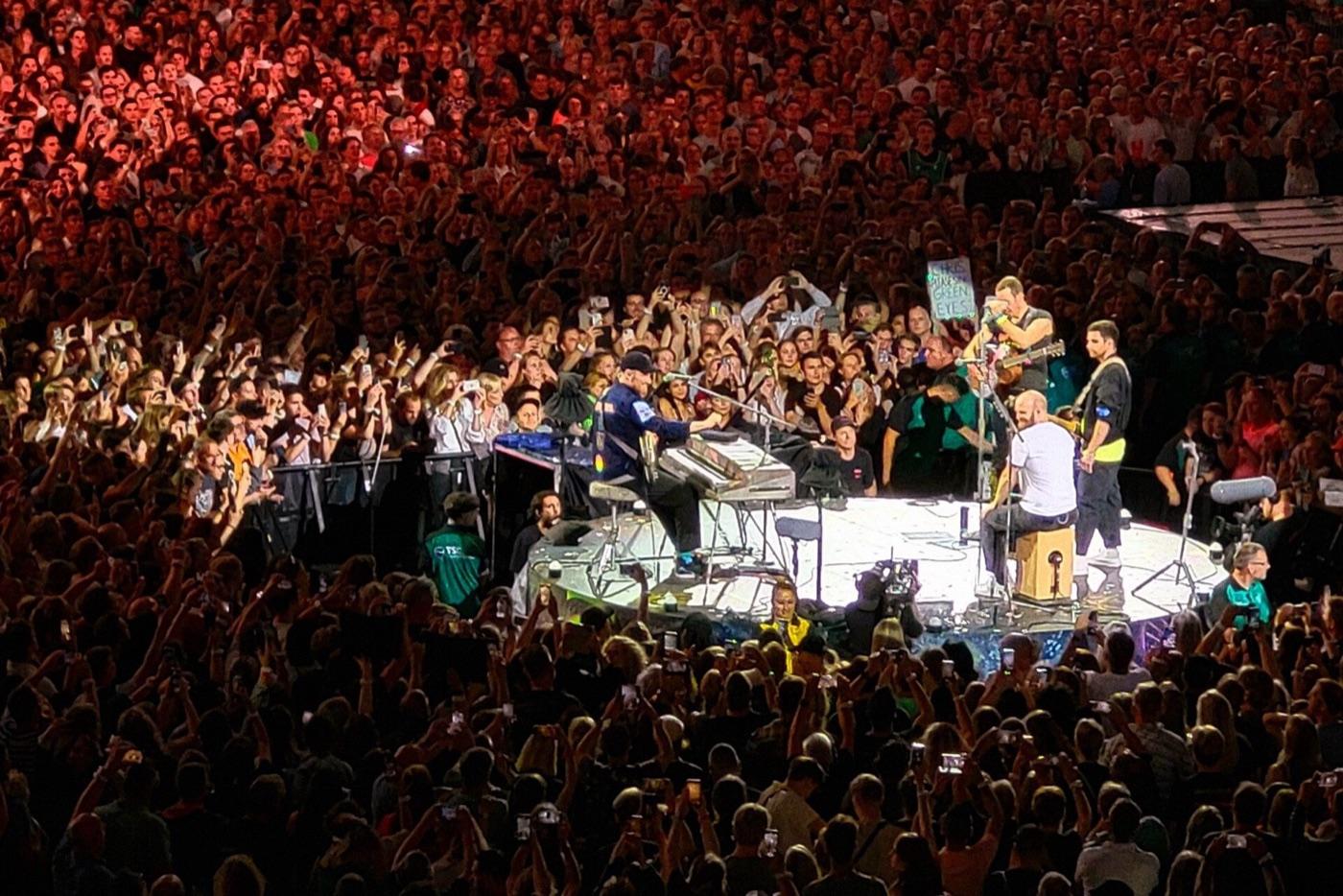
The original kiss-cam clip is a concertgoer's phone video of Chris Martin making up his Jumbotron Song live at Gillette Stadium on 16 July 2025. The memes reuse that footage and swap in new faces.
A clip like this raises questions beyond the song. The performers may have rights over recordings of their live performance, and the person who filmed it may own the footage. These are permission questions, separate from royalties, and the answer can depend on the country. If footage of your live show is reused this way, ask a music lawyer before you act.

What happened with the Jensen Huang memes
In early November 2026, news about the private life of Nvidia's chief executive Jensen Huang spread across the world, and AI tools turned it into music videos and parodies within hours. Coverage named APT., the Coldplay kiss-cam clip, Confessions Part II by Usher and It Wasn't Me by Shaggy. 50 Cent posted an AI version of his own P.I.M.P. video. Two counts give a sense of scale. Neither one measures what any song earned.
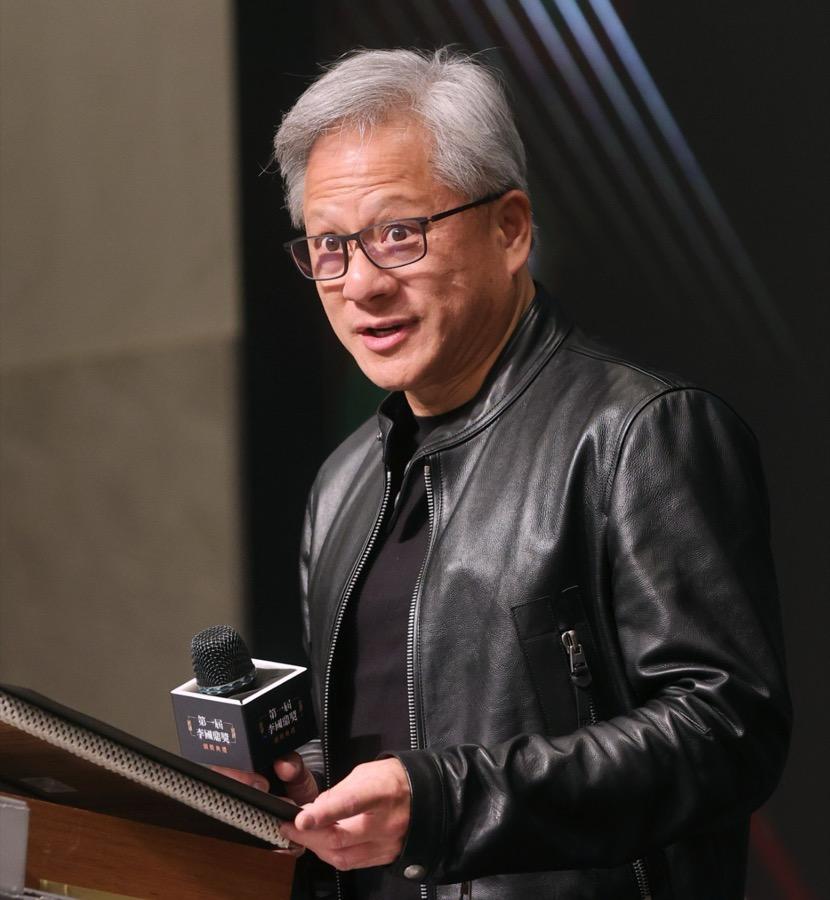

- AI posts on X: AI-detection company Copyleaks counted at least 70 AI-related posts about the story, with about 8.42 million views, as of the morning of 9 November 2026. Read TechCrunch's report on the Copyleaks count
- AI-edited TV and film parodies: parodies of Huang had more than 40 million views, according to Chartbeat data reported by The Ankler on 18 November 2026. The Ankler notes that this undercounts, because some videos were taken down. Read The Ankler's report on the parodies
Is a meme legal under UK copyright law?
UK law allows fair dealing for caricature, parody and pastiche. The exception does not cover every use, and a meme that copies a full recording is less likely to qualify than one that uses a short part to make a joke. Read the UK government guidance on copyright exceptions. This is general information, not legal advice. Ask a music lawyer about a specific case.
Before you assume an older use cannot be recovered
A clip from weeks or months ago is not always a lost cause. Check these before you give up on it:
- Is the clip still online? Ask your distributor whether a new Content ID reference can still match videos that are already posted.
- Has it reached your statements yet? Platform income can arrive months after the use, listed under the platform's name rather than the clip.
- What is the claim deadline? Collecting societies set time limits for claiming missing royalties, and the limits vary. Ask your society or publishing administrator.
- Is the money sitting unmatched? If your song was not registered correctly at the time, its income may sit in an unmatched pool. Ask your publishing administrator whether it can still be claimed. Learn where unmatched royalties go
Evidence to save when your song goes viral
Save these details for every clip. Your distributor, publisher or lawyer will ask for them, and a clip can disappear without warning:
- The post URL
- The account name and handle
- The date it was posted and the date you found it
- The territory, if you know where the clip is being watched
- The official sound link, if the creator used the platform's music library
- Your recording's ISRC (the code that identifies a recording)
- The songwriter splits and each writer's IPI number (the number that identifies a songwriter)
- Any claim, dispute or statement reference
A message you can send to your distributor or publisher
Copy this, fill in the details and send it with your evidence:
"Hello, my song [song title] (ISRC [code]) appears in a viral clip at [link], posted by [account] on [date]. Can you tell me whether this use is matched to my release, how it will be reported, and whether I need to register or claim anything? Thank you."
If these checks show a missing registration or unclear rights, request a free Catalog Assessment. Tell us about your catalogue in the short form and we will tell you where registrations are missing and what to fix first.
Frequently Asked Questions
Do AI meme videos pay the songwriter?
They can. The songwriter is paid through the song's route, via their publisher, publishing administrator or collecting society, when the platform reports the use and the song is registered and matched. Whether that happens depends on the platform, the territory and the type of use. Ask your publisher which uses they can report.
Can I take down a meme that uses my song?
On YouTube, the rights holder can block a matched video through Content ID or send a copyright takedown request. On other platforms you can send a copyright notice through the platform's form. For a song that gains listeners from the meme, earning from it through Content ID is often the better choice.
Is a parody meme covered by UK copyright law?
The UK has a fair dealing exception for caricature, parody and pastiche, but it does not cover every use. A meme that copies a full recording is less likely to qualify than a meme that uses a short part to make a joke. Ask a music lawyer about a specific case.
Why did a viral meme not show up on my royalty statement?
Common causes are a song that is not registered, writer splits that do not match, a recording that is not in Content ID, a clip that uses a new version rather than your recording, or a use your rights partner cannot see. Check each one, then send the clip details to your distributor or publisher.
Published · Updated